Welcome to My New Film Blog
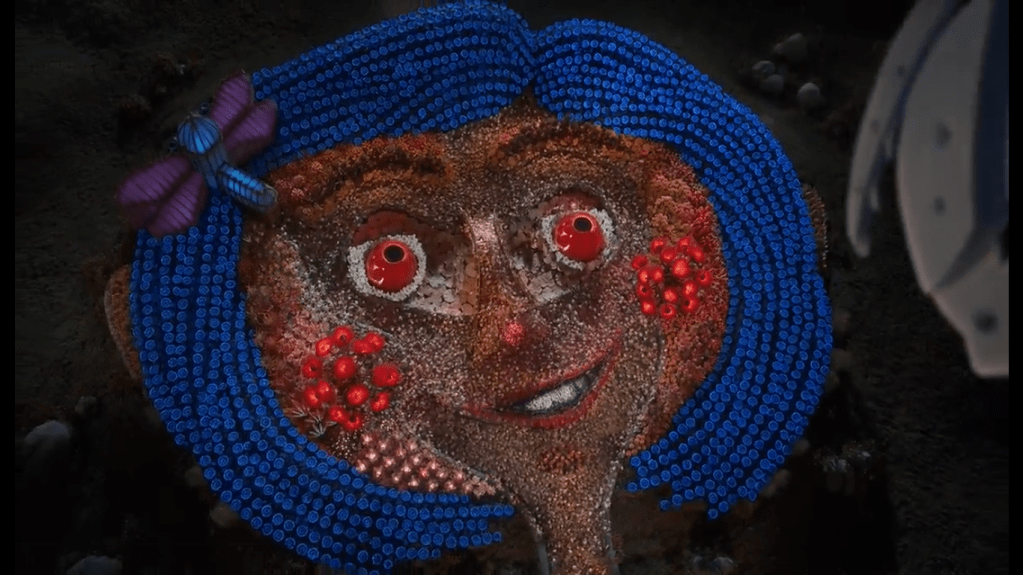
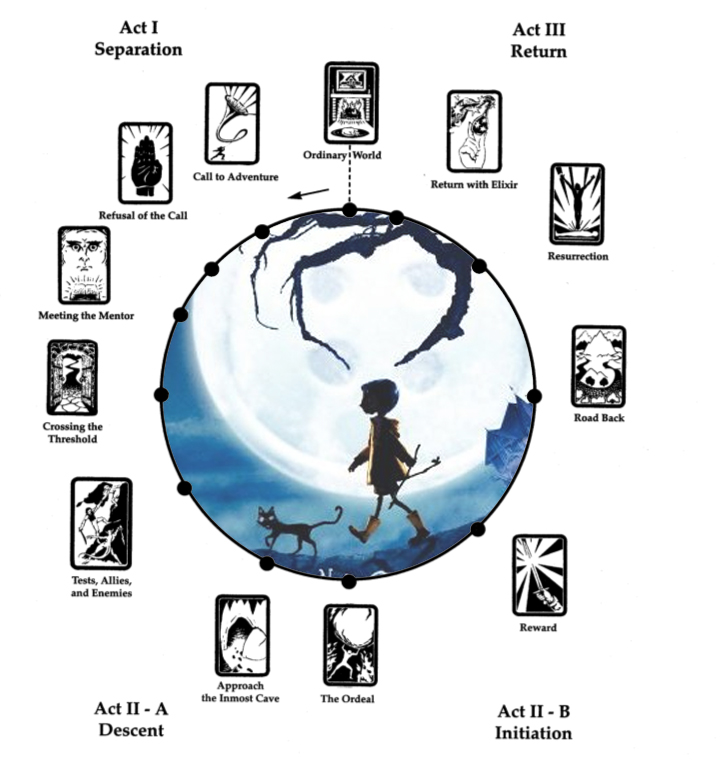
Within this post-classical and contemporary era of the animation genre, we have seen a wide variety of changes both stylistically and thematically. Namely, the emergence of the “animated children’s horror” film. Examples of these include; The Nightmare Before Christmas, ParaNorman, The Monster House etc. Lester (2016) comments on this genre stating that it draws on typical horror conventions, however, does so in a child-friendly way, by lessening gore and using clever animated styles. I will attempt to show here, using the 2009 film Coraline as example, how these new genres still follow a basic underlying narrative structure found in folklore, mythology and Disney fairy tales. Brown (2021) states that the “circular journey” is a narrative structure that is found commonly in children’s animation. Or, as Joseph Campbell first found in The Hero With a Thousand Faces (1942, pg. 68) “There is what I would call the Hero’s Journey, the night sea journey, the hero quest, where the individual is going to bring forth in his (her) life, something that was never beheld before.” Campbell believed that this Hero’s Journey had several components, which I will take you through now.
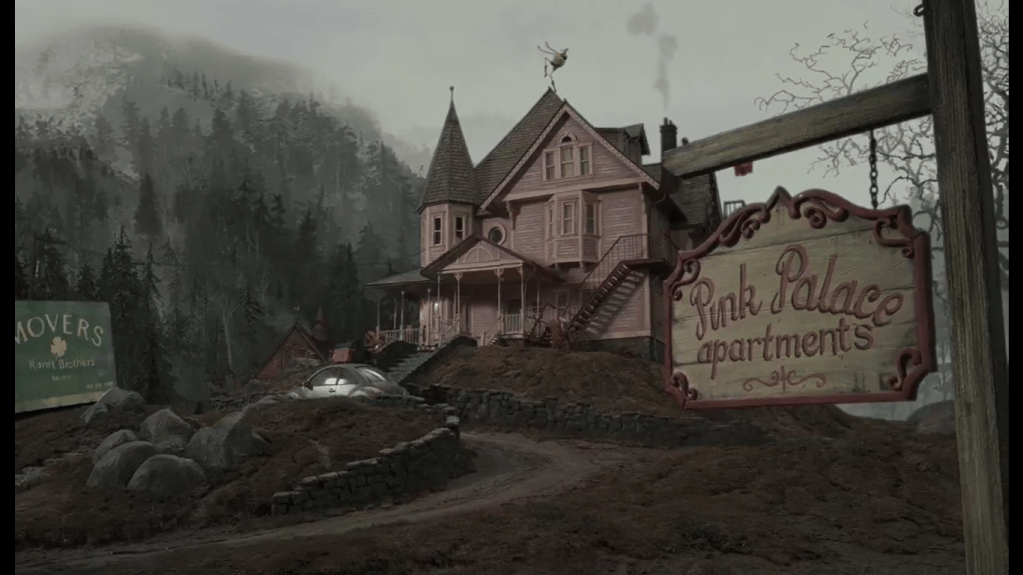
The Ordinary World – Most stories have the hero beginning off in the ordinary world. The ordered and structured domain, here the protagonist usually finds their lives growing stale, mundane and boring. This is no different in Coraline. We meet Coraline in a grey dull world, where her workaholic parents don’t have time to amuse and entertain her, a world where everyone calls her “Caraline” not Coraline, taking away her one sense of uniqueness. Many mythologies start off in the same domain, such as the Buddha growing up in a perfectly ordered state or Adam and Eve in the garden of Eden. Mulan (1998) begins her story doing chores and feeding chickens.
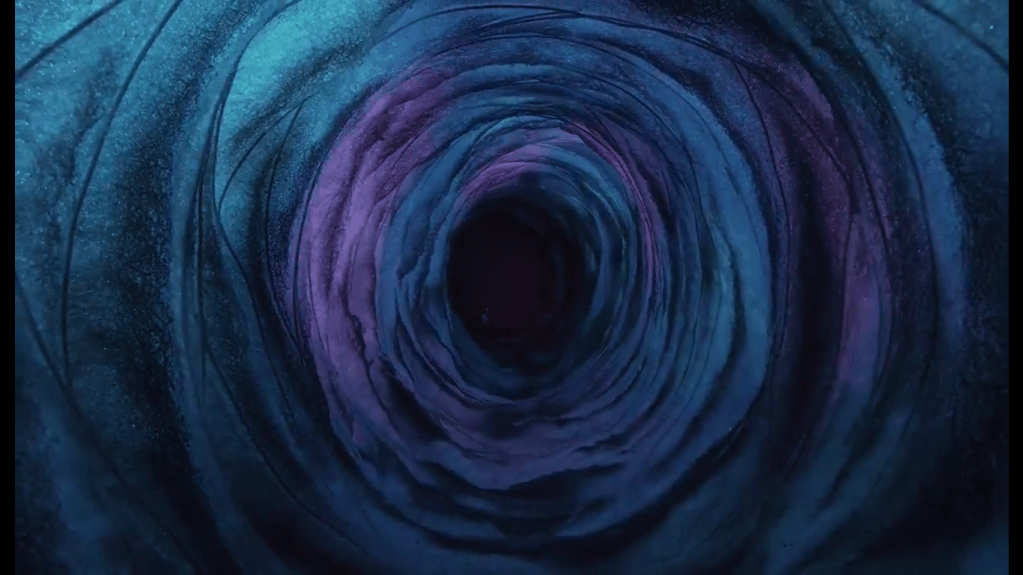
The Call to Adventure – Next we usually see our protagonist being presented with a problem, challenge or adventure to undertake. Once presented with this call, the hero can no longer remain indefinitely in the comfort of the ordinary world. Coraline’s call is finding the hidden door in the living room and later in the night when she is led to the same door by a trio of jumping mice and must crawl down the rabbit hole to the special world, Alice in Wonderland-esque.
Refusal of the Call – “This one is about fear. Often at this point the hero balks at the threshold of adventure, Refusing the Call or expressing reluctance. After all, she is facing the greatest of all fears, terror of the unknown.” (Vogler, 1992, pg. 11) Coraline enters the special world and is showered with gifts, love, treats and everything she has been desiring. She is sceptical of her “other mother” however and requests to leave and return to her ordinary state. Luke Skywalker at this point of his story refuses Obi Wan’s call and returns to his already burning and destroyed “normal/ordinary” home.
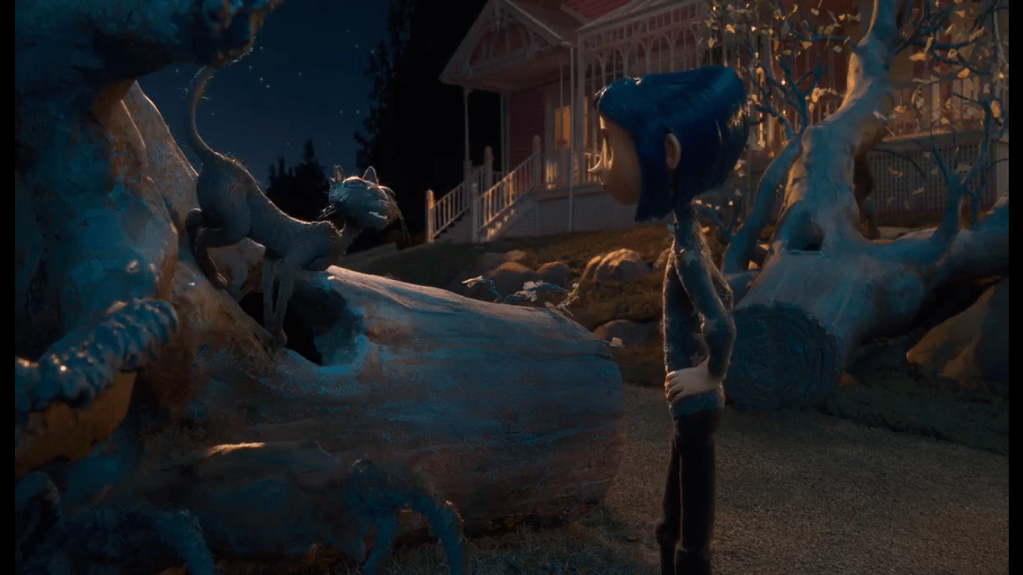
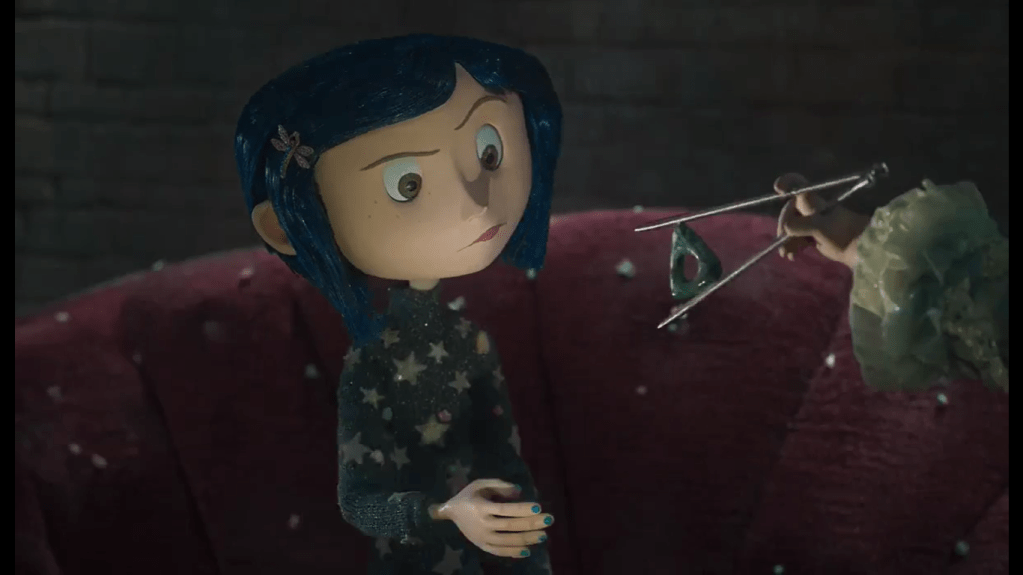
The Wise Old Man or Woman – Most stories have a mentor figure who guide our hero spiritually through their journey. Examples include Merlin guiding King Arthur or Jimminy Cricket acting as Pinocchio’s conscience. Coraline’s mentor is the feral cat who is introduced earlier in the story by Wybie but who makes his first true appearance during her second quest to the other world. Here, he lets her know not all is what it seems and explains her “other mother’s” true intentions are to keep her, love her and devour her. Like the witch’s house in the Hansel and Gretel tale, all is too good to be true. Vogler (1998, pg. 12) states that “The function of the Mentors is to prepare the hero to face the unknown. They may give advice, guidance or magical equipment.” Using this definition, Coraline’s mentor can be substituted in by her neighbours, Miss Spink and Miss Forcible who provide Coraline with a magical eye piece which she later uses in the special world to attain her reward.
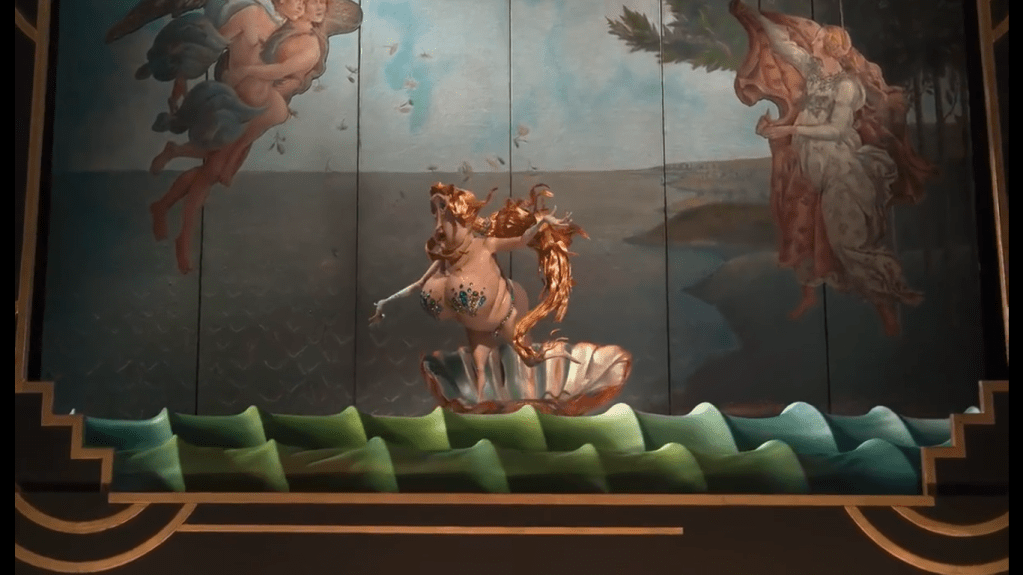
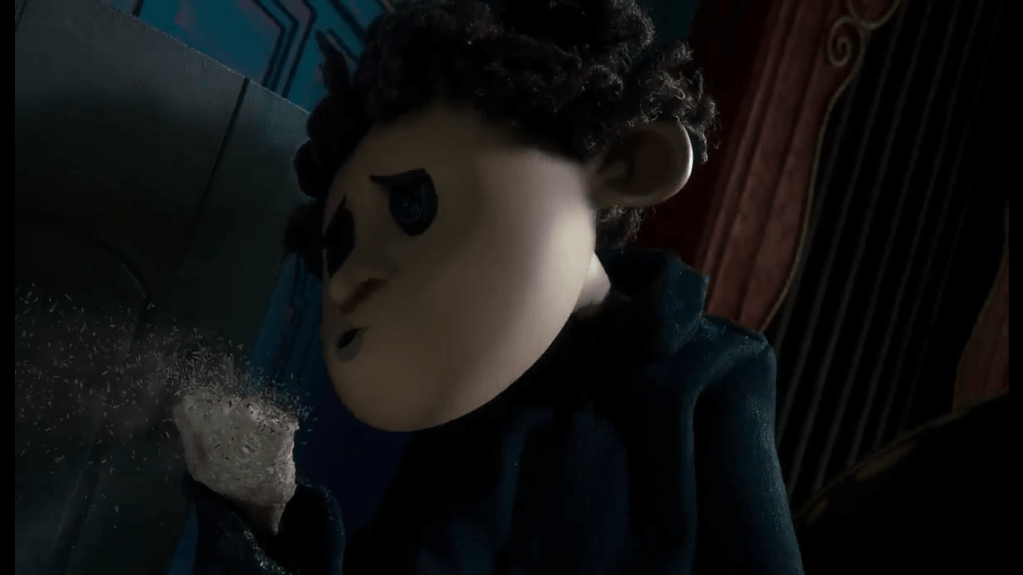
Tests, Allies and Enemies – Once our protagonist is deeply embedded within this new world they encounter new challenges and make new allies and enemies. The most obvious example being Dorothy coming across the Scarecrow, Tin Man and Cowardly Lion or within Disney mythology Simba encountering Timone and Pumba in the chaotic desert. Coraline is tested and enticed with gifts and spectacular events and meets new allies like “Other Wybie” and Mr. Bobinksy.
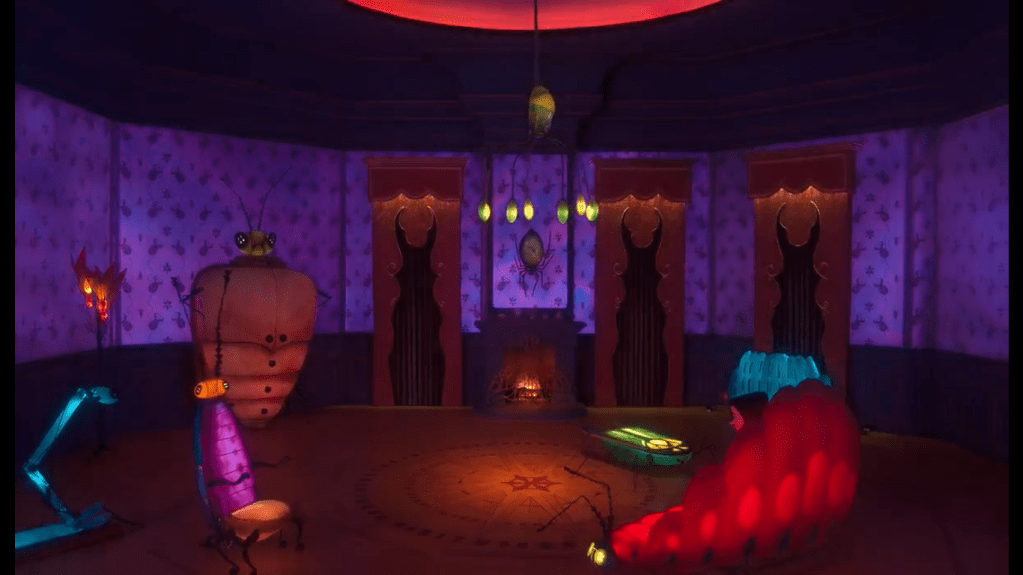
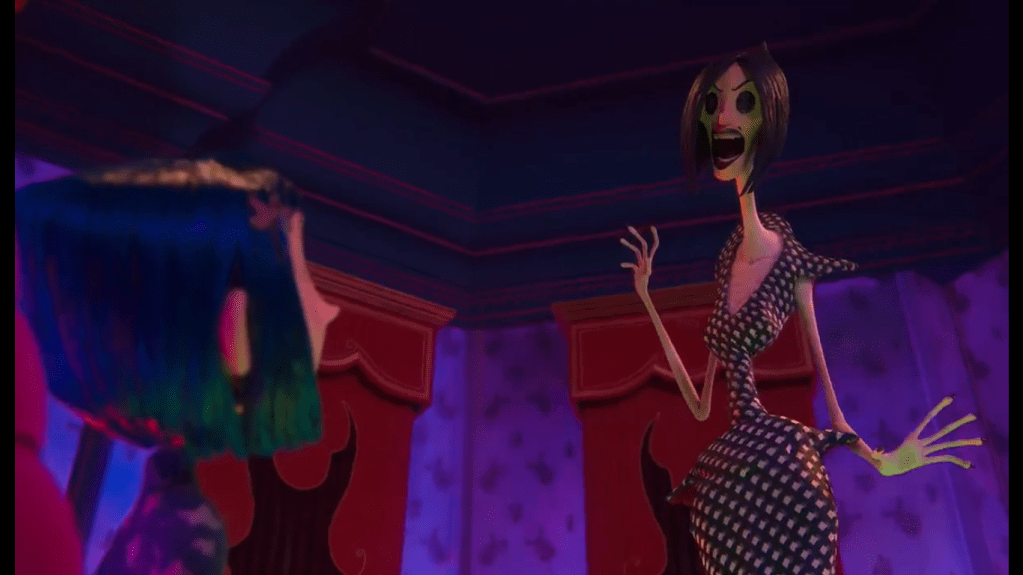
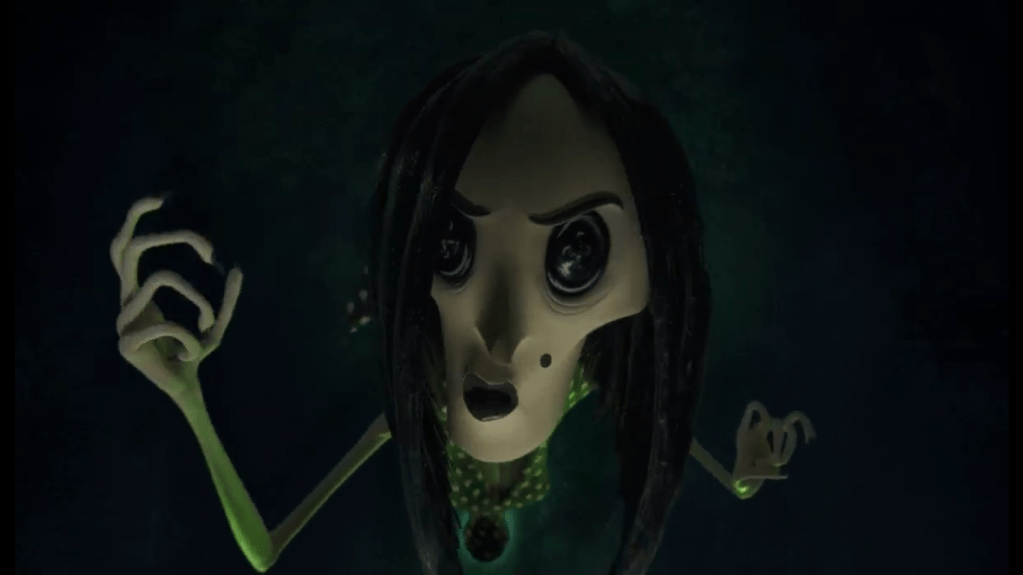
Approach to the Inmost Cave – The hero comes to the edge of a dangerous place, usually deep underground or (like Pinocchio) deep underwater. In mythology this Inmost Cave may be represented as the land of the dead. The hero may have to enter a cave and fight a dragon or into a labyrinth to confront a monster. Coraline’s Inmost Cave is the bug ridden living room, where her other mother requests to take her eyes so that she can finally stay forever. Upon Coraline’s stern refusal her other mother (now beginning to take on her true form as “the Bedlam”) entraps her within the mirror, leading to Coraline’s central ordeal.
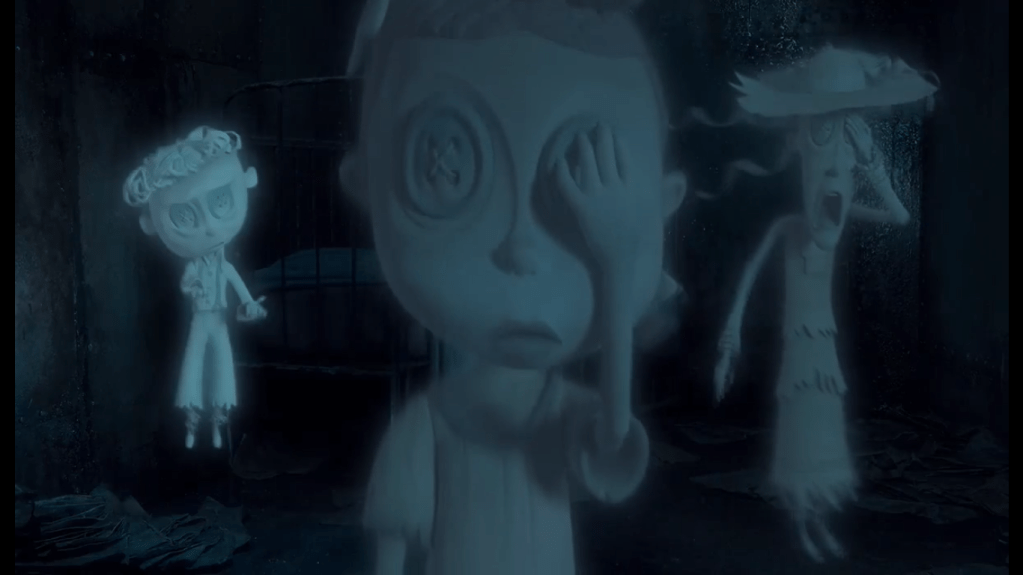
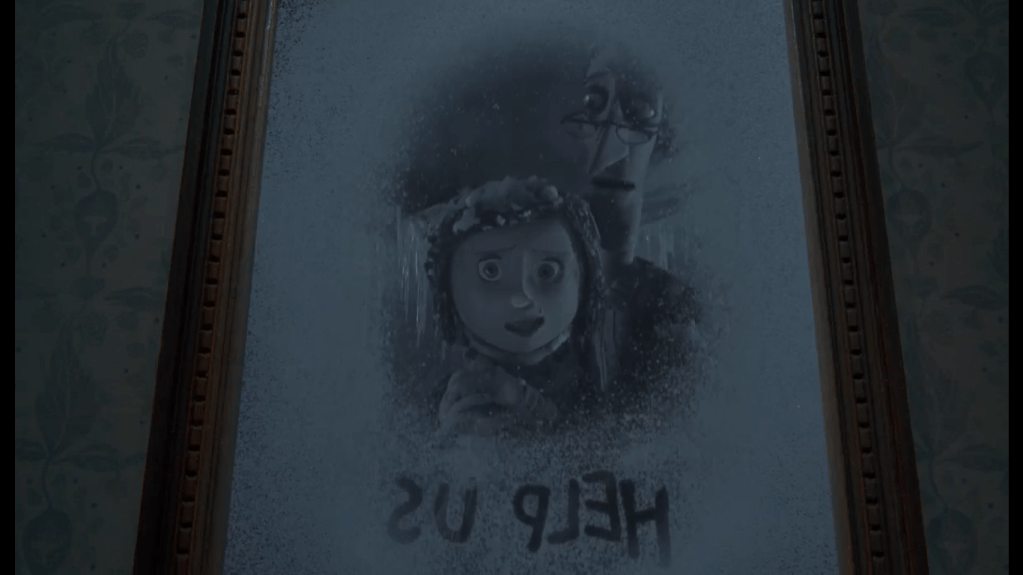
The Ordeal – Vogler (1998, pg. 14) states about this section that, “(the hero) faces the possibility of death and is brought to the brink in a battle with a hostile force. The Ordeal is a “black moment” for the audience, as we are held in suspense and tension, not knowing if she will live or die. The hero, like Jonah, is “in the belly of the beast.” Coraline’s death and rebirth encounter can be shown with her meeting of the ghost children, who have previously been consumed by the Bedlam. Coraline vows to save their eyes which the Bedlam has sowed off and rescue them from the Inmost Cave. Coraline escapes and manages to return home where she discovers that the Bedlam has kidnapped her true parents. So, Coraline must return to the magical world and rescue the ghost children she previously met as well as her parents. The Ordeal can be seen in Star Wars where Luke and his company are entrapped in the giant trashmasher and Luke is pulled under by the tentacle monster that lives underneath. The Ordeal can also be seen in Sleeping Beauty, where Prince Philip fights Maleficent who has transformed into the dragon of chaos.
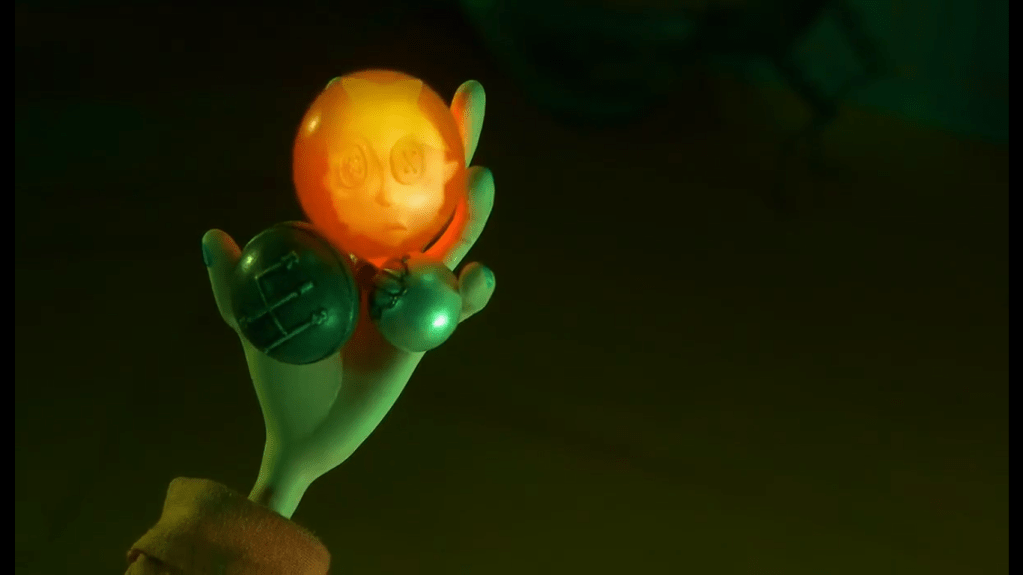
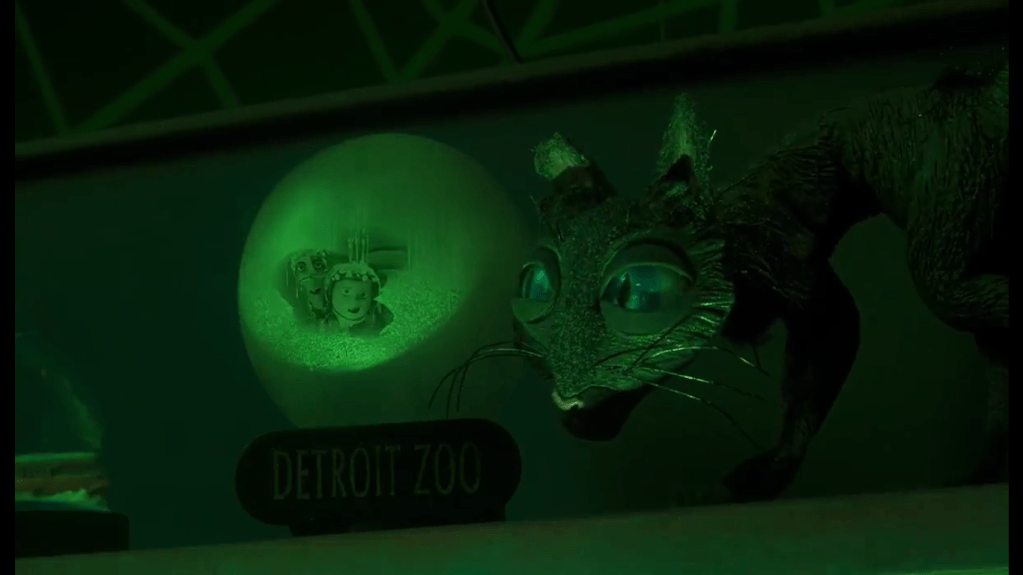

Reward – Having slain the dragon or minotaur our hero can now retrieve the treasure or elixir that they have come to obtain. This is typically the highest point in the story and a celebration or party may take place around this point in the narrative. Coraline, having outsmarted the Bedlam, who has transformed into her own spider of chaos, retrieves all three of the ghost children’s eyes and the snow globe which her parents have been trapped in. This motif of rescuing your parents from the underworld is a theme that is common in many mythologies as well as Disney animated narratives; think Simba’s initiation scene with his heavenly father or Pinocchio rescuing Geppetto from the bottom of the ocean in the belly of a whale.
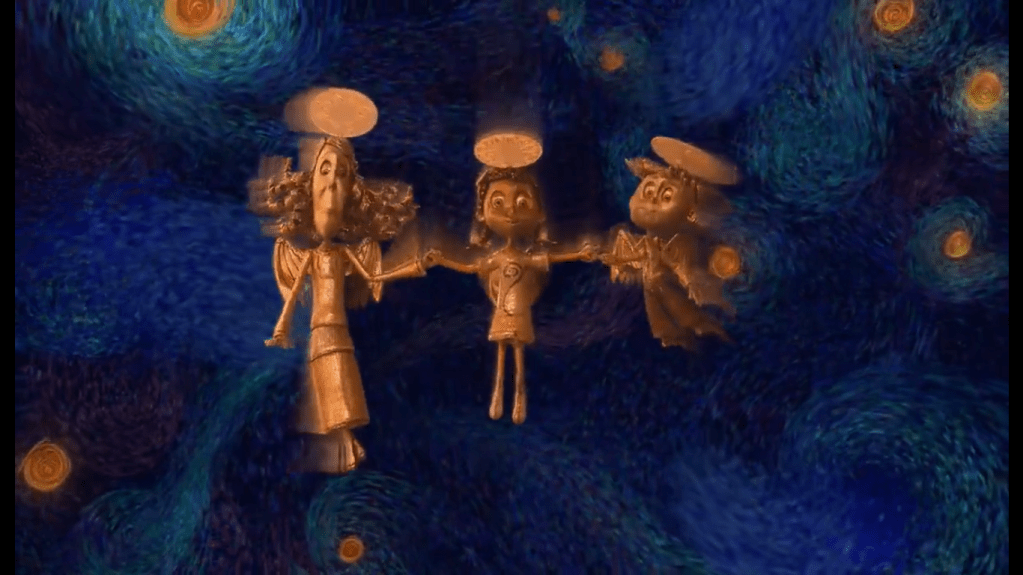
Resurrection – “This is often a second life-and-death moment.” (Vogler, 1998, pg. 17) Having escaped the Bedlam in her true complete chaotic form, Coraline returns home and goes to bed. Coraline’s Resurrection phase can be seen in her dreams later that night where she encounters the ghost children again, in their new, golden and resurrected form.
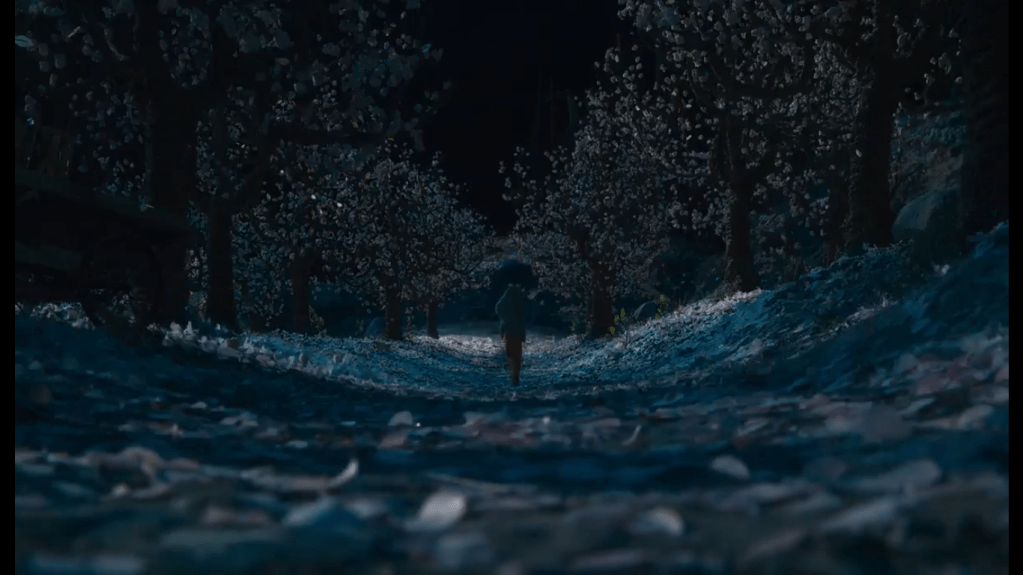
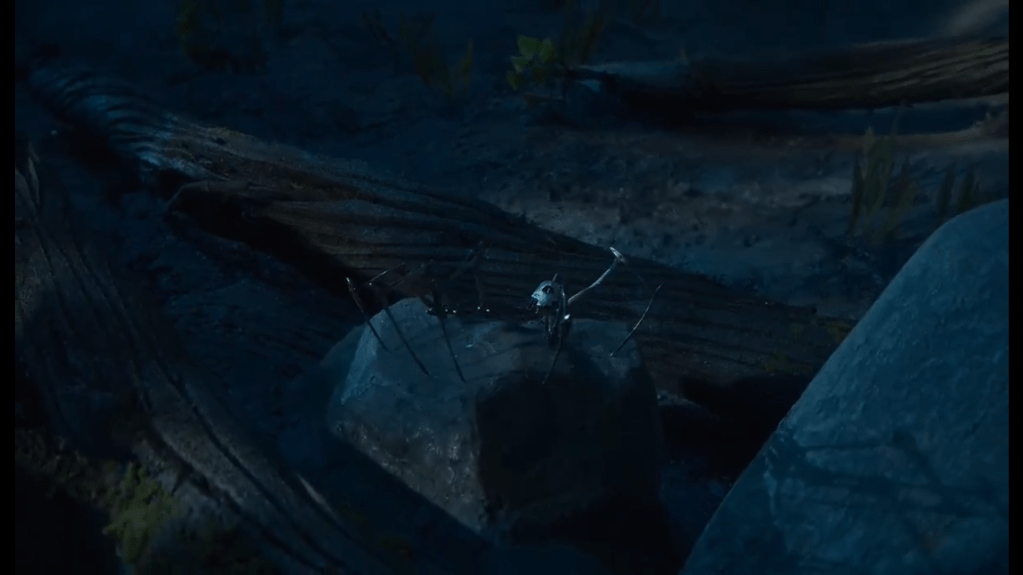
The Road Back – This stage marks the decision to return to the ordinary world. The hero realises that the Special World must eventually be left behind and there are usually still tests and dangers for our hero ahead. Coraline’s Road Back is visualised as a literal trail to the well, where she plans to dump the key to the other world and leave it behind forever. “Some of the best chase scenes spring up at this point, as the hero is pursued on The Road Back by the vengeful forces she has disturbed.” (Vogler, 1998, pg. 17) Little does Coraline know she is being pursued by the metallic hand of the Bedlam who has one final attempt at dragging Coraline back to her deadly and chaotic domain. With the help of Wybie however, the Bedlam is final destroyed and thrown down the well along with the key.
Return with the Elixir – Finally our hero returns to their ordinary and orderly state; usually bearing some valuable treasure or magic elixir or simply like our protagonist Coraline, a lesson learned and additional knowledge. Coraline learns like Dorothy before her that the mundane should sometimes be accepted rather than the fantastical and that she is loved by her boring family and friends.
It Follows; The Burden of Growing Up
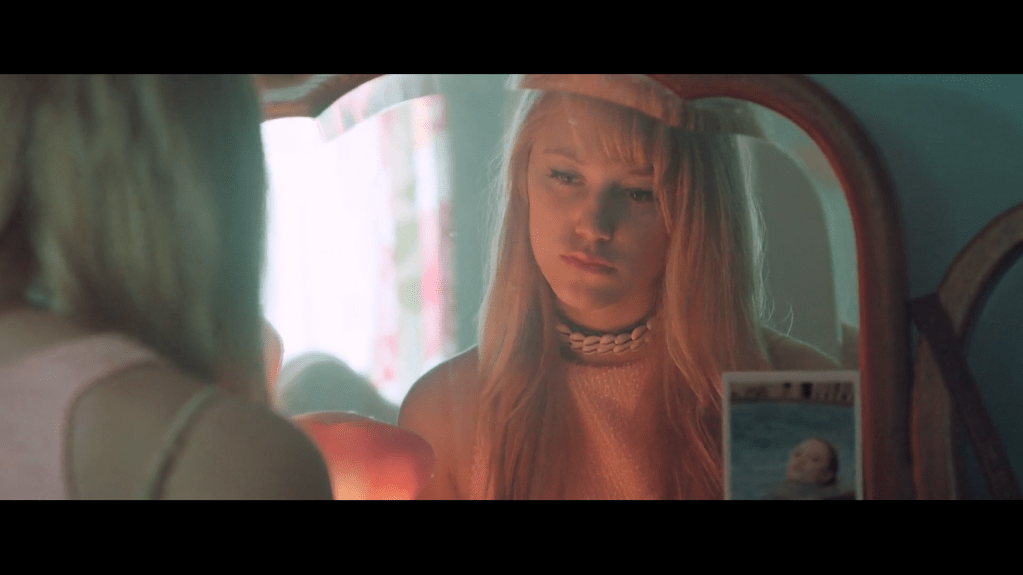
David Robert Mitchell’s 2014 film ‘It Follows’ generated a lot of discussion upon its release and still does until this day. Generally, the film has been read as a metaphor for Sexually Transmitted Diseases or sexual assault; a demon that’s passed between people by sex makes this an obvious interpretation. Although these interpretations are valid, ultimately I think the films thematic roots are much more mundane and commonplace. Mitchell provides a lot of subtext, pieces of information that aren’t directly given to us, but that add a lot of clarity to the film. The major theme the film explores is the end of adolescence and the stepping into adulthood. The story is set in Detroit, Michigan during an Indian Summer, this is a period of unseasonably warm weather that occurs in the fall. Symbolically I believe this represents the core theme of adolescence, with Summer representing youth, Autumn representing the coming decay which eventually leads to Winter, or old age and death. In essence, an Indian Summer is youth still clinging on, trying to keep death at bay.
Jay (the central protagonist) is a student in college, but unlike much of her graduating class she elected to stay behind in her hometown. Further detailed in some deleted dialogue cut from the film, we find out that Jay had the opportunity to leave for college with her father paying for her expenses, but that she doesn’t see the point. Opting instead to stay home, only going to school out of obligation to be able to stay. She’s not quite ready to grow up. She used to dream of the freedom she would have when she got older, but now that freedom has become a form of paralysis. “It’s funny, I used to daydream about being old enough to go on dates, holding hands with a really cute guy, drive around with friends in their cars, listening to the radio… It was never about going anywhere really, just about having some sort of freedom, I guess. But now that we’re old enough, where the hell do we go?”
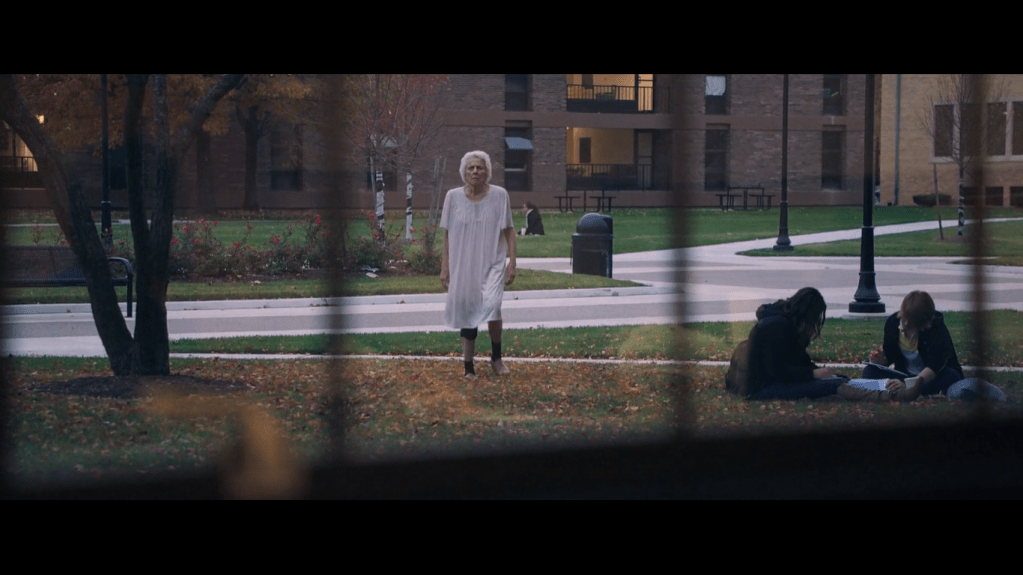
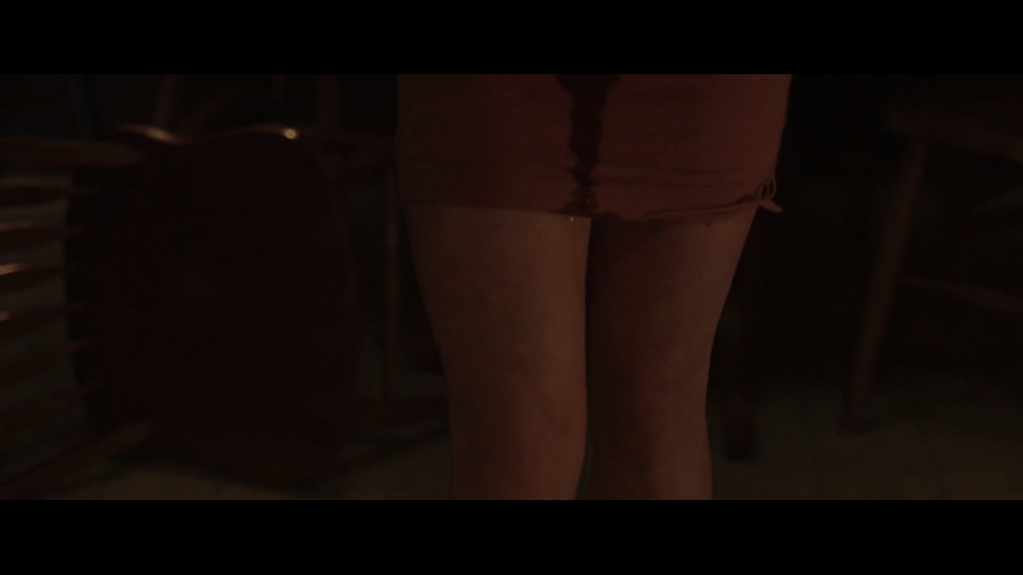
This confrontation of adolescence and adulthood can force people into a stasis. Holding on to our past for as long as we still can; before old age comes to claim us. When we can no longer clothe ourselves or maintain control of our bodily functions and our body itself begins to decay. The slow march of time is coming for all of us and there is no hiding from it, no stopping it, you can only postpone it for a little while longer. “Just pass it along, if it kills you it’ll come after me, do you understand.”
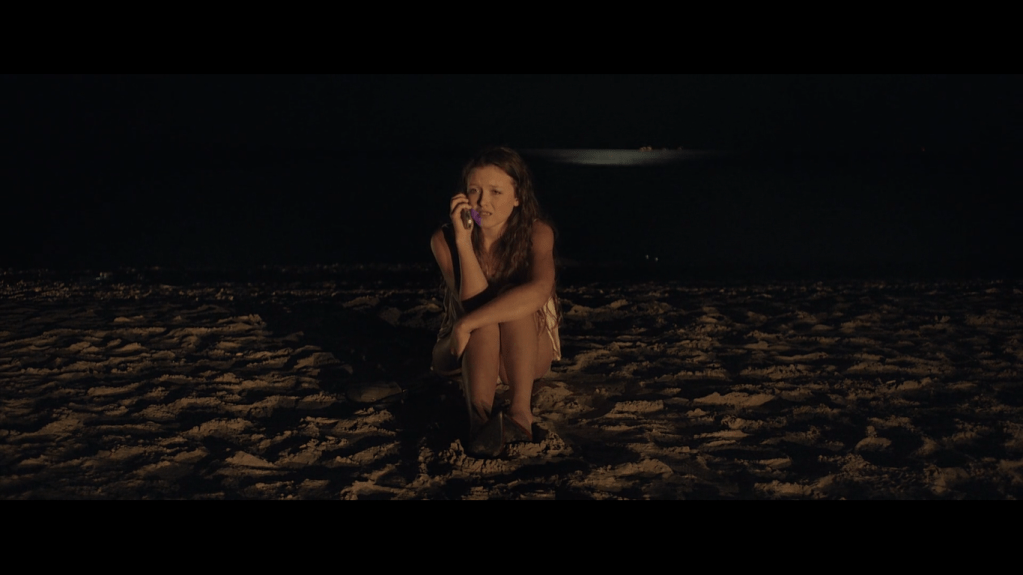
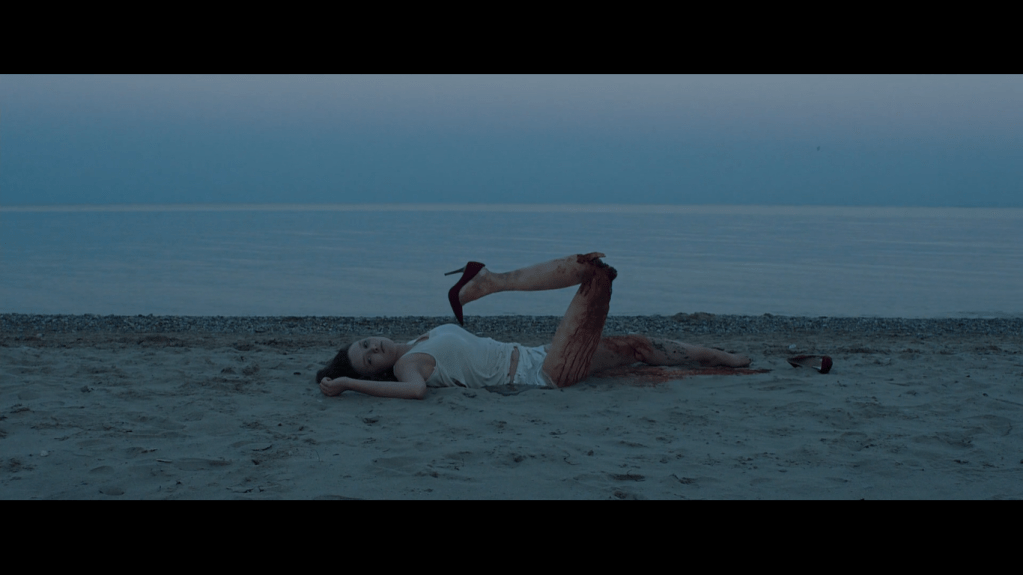
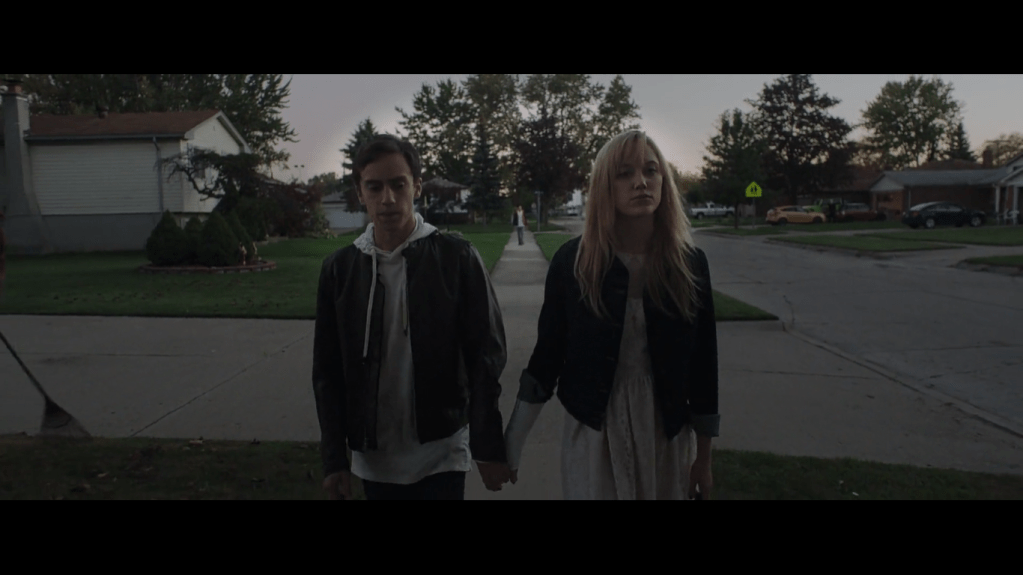
For some the fear is too strong and they give in.
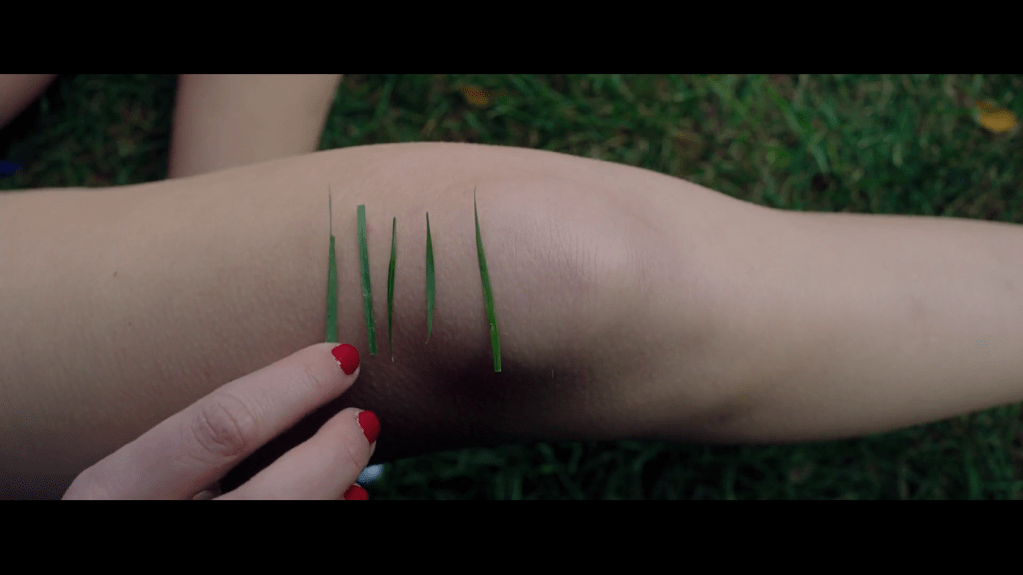
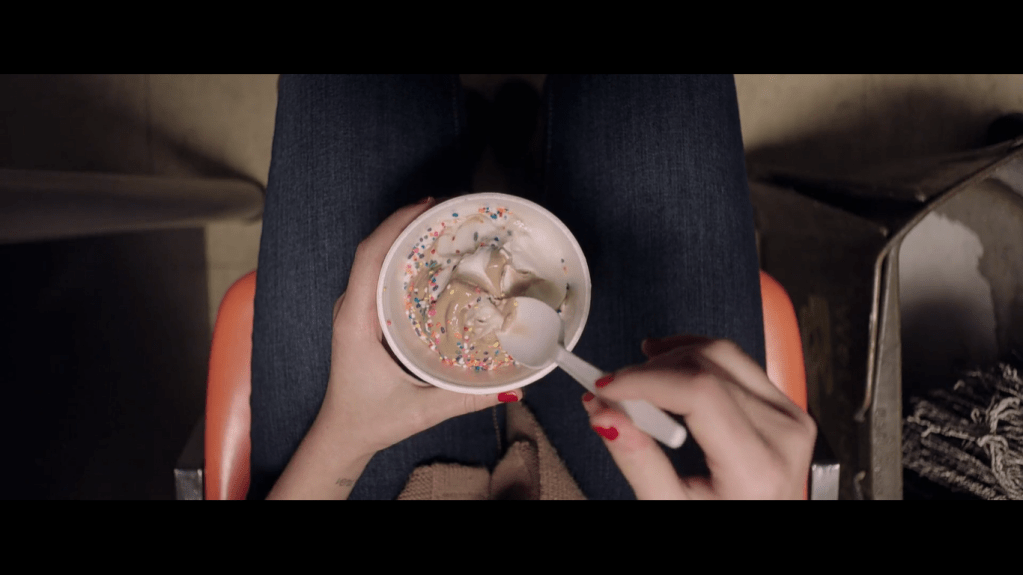
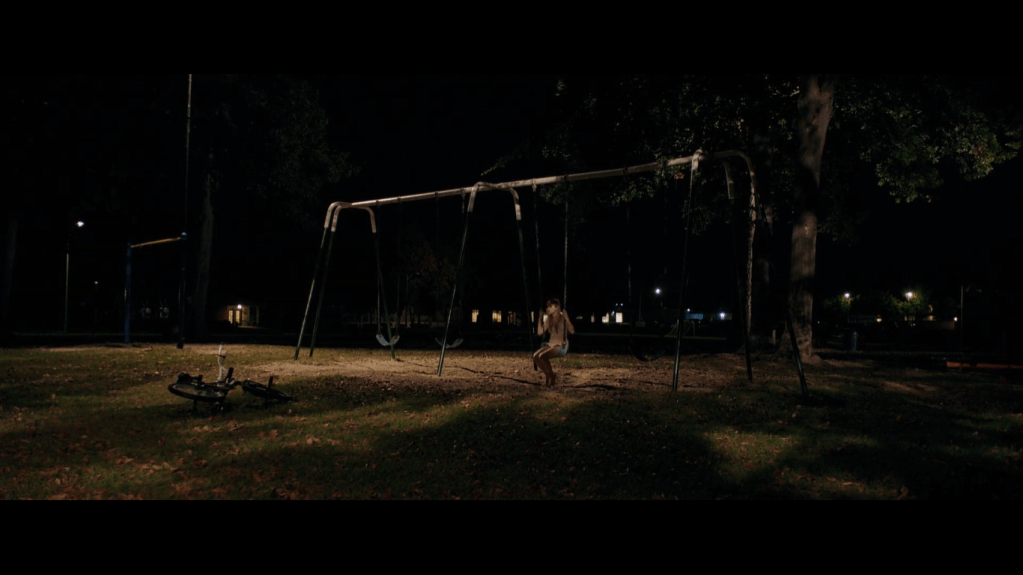
Others turn to self-harm as a way of coping; echoed in this shot of Jay stacking blades of grass that look like scars and a small glimpse of a bandage on Jeff’s wrist. For Jay, maybe it’s by returning to a familiar comfort, like getting ice cream or going on the swings at the park; both of which immediately happen after close encounters with the demon.
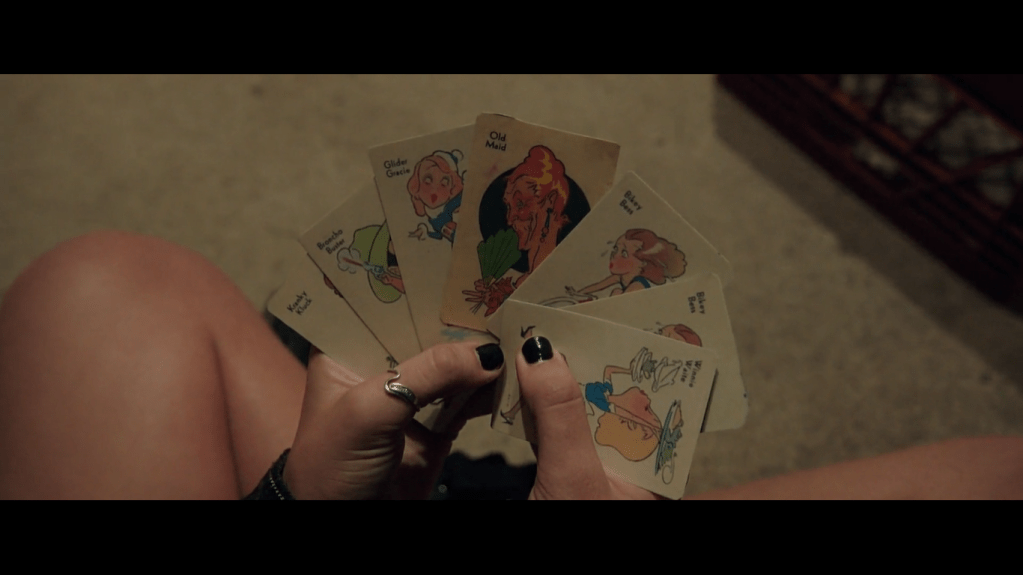
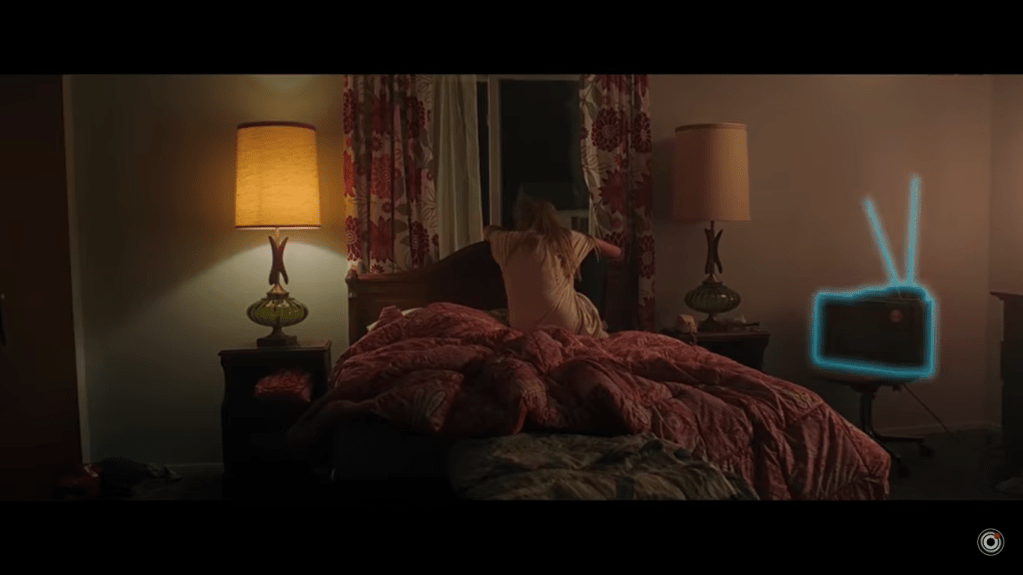
Littered throughout the movie there are references and nods to this theme, from the game of ‘Old Maid’ the characters play on the porch or the presence of older technology throughout the film that suggests difficulty letting go of the past; because as is made clear, growing up is not what most of us expect. Those cute girls/boys can break your heart, that small town will feel lonely, but the world outside can seem to big and terrifying and every day you’re just taking one step closer toward death. The city of Detroit comes to represent this notion of decay as the further we get away from the suburban paradise of Jay’s hometown, the more decrepit the world becomes. “When I was a little girl, my parents wouldn’t let me go South of 8 Mile. I didn’t even know what that meant until I got a little older and I started realising that’s where the city started, and the suburbs ended.” Yara “My Mom said the same thing.” Jay. As much as our parents might try and protect us, the world is going to hurt us and these fears, anxieties and traumas accumulate and become ghosts that haunt us. They can take the shape of ex-boyfriends and girlfriends or maybe it can take the shape of your anxieties about the future and who you may become; old, grey and falling apart or even what someone else may become, like the little boy living next to Jay who’s already showing a sexual fascination over her. Littered throughout the movie there are references and nods to this theme, from the game of ‘Old Maid’ the characters play on the porch or the presence of older technology throughout the film that suggests difficulty letting go of the past; because as is made clear, growing up is not what most of us expect. Those cute girls/boys can break your heart, that small town will feel lonely, but the world outside can seem to big and terrifying and every day you’re just taking one step closer toward death. The city of Detroit comes to represent this notion of decay as the further we get away from the suburban paradise of Jay’s hometown, the more decrepit the world becomes. “When I was a little girl, my parents wouldn’t let me go South of 8 Mile. I didn’t even know what that meant until I got a little older and I started realising that’s where the city started, and the suburbs ended.” Yara “My Mom said the same thing.” Jay. As much as our parents might try and protect us, the world is going to hurt us and these fears, anxieties and traumas accumulate and become ghosts that haunt us. They can take the shape of ex-boyfriends and girlfriends or maybe it can take the shape of your anxieties about the future and who you may become; old, grey and falling apart or even what someone else may become, like the little boy living next to Jay who’s already showing a sexual fascination over her.

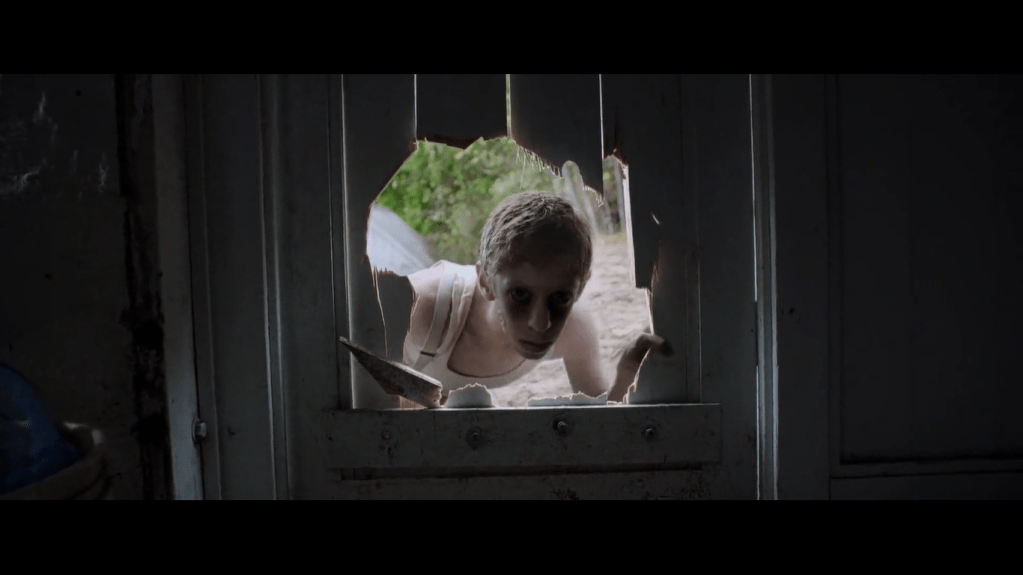
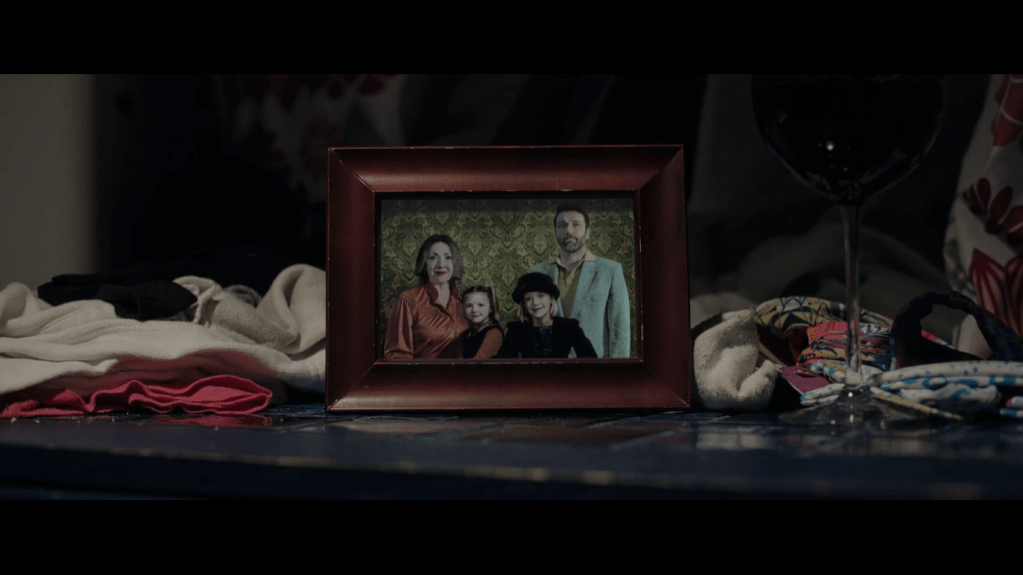
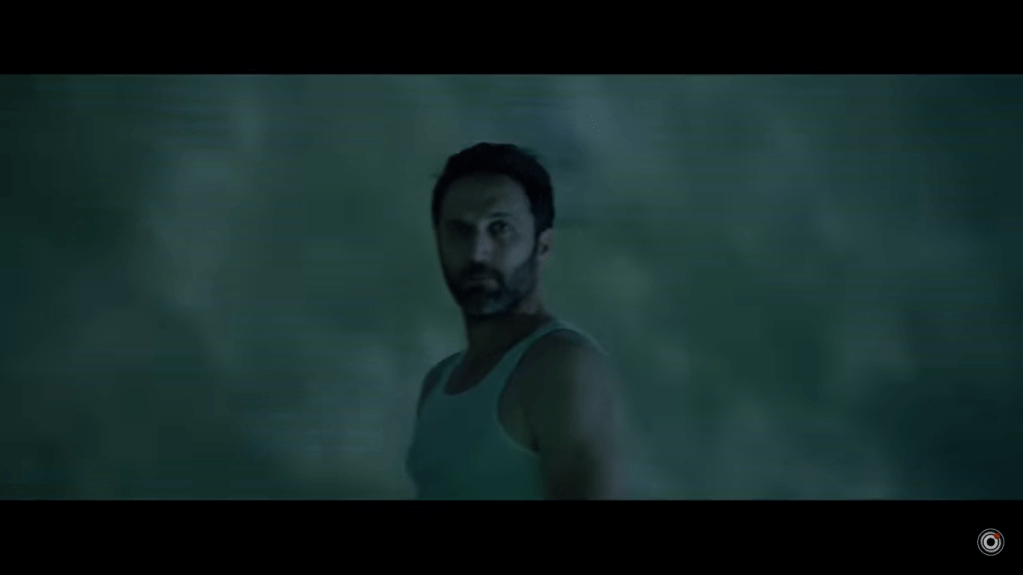
These ghosts can also take the form of parents or grandparents, as we see when It attacks Greg, when It appears as an old man standing on the roof, or the final scene in the pool, where Yara asks “Jay what do you see?” her response is “I don’t want to tell you.” The audience can see however that it is her father. We see pictures of Jay with her father, but we never actually see him in the film. We don’t know what happened to him we just know he isn’t around anymore. Whether by their own choices or not, a parent’s absence in a child’s life still feels like abandonment; which is further exacerbated for Jay after her night with Jeff where he uses, her for sex to pass along the curse. “It was consensual.” A police officer asks after the incident… “Yeah” Jay states. While Jay may have consented to the sex itself, she was emotionally manipulated into making that decision. As Jeff lied about who he was and was just using her as a means to an end. Only reappearing after being confronted by Jay where he deflects blame because… “I wasn’t trying to hurt you ok? Somebody did this to me too.” Someone pretending to be someone they’re not, saying and doing whatever they have to in order to get into bed with someone, making excuses for their behaviour because they’ve been hurt too. These are not unfamiliar concepts to most people. And sometimes it can hurt you enough that you do the same thing to someone else, and in your attempt to make the pain go away you end up inflicting it onto others… You could pass it on? You did once.” Paul “I shouldn’t have.” This is the cost of intimacy however, once you become intimate with someone, you inherit all of their trauma, whether it was caused by parents or previous relationships, it will now follow you too. Deep-rooted trauma or anxiety isn’t something that can be killed or fought really, the best thing you can do is accept that it is there and not let it consume your life, by sharing those demons with those you can trust and by leaning on friends in times of need, even when they don’t understand exactly what you’re going through.
Plastic Representation in Modern Action-Adventure Movies?


The music video to Jay-Z’s 2017 track Moonlight perfectly portrays what has been coined as “Plastic Representation” (Warner, 2017) within the film and TV industry. Moonlight samples Friends (1994-2004) as its source material; however despite the photography, mise-en-scene and costume design all being nearly identical, the original cast is substituted out for their younger black counterparts and the iconic “I’ll be there for you” soundtrack is replaced with Whodini’s “Friends” (1994).

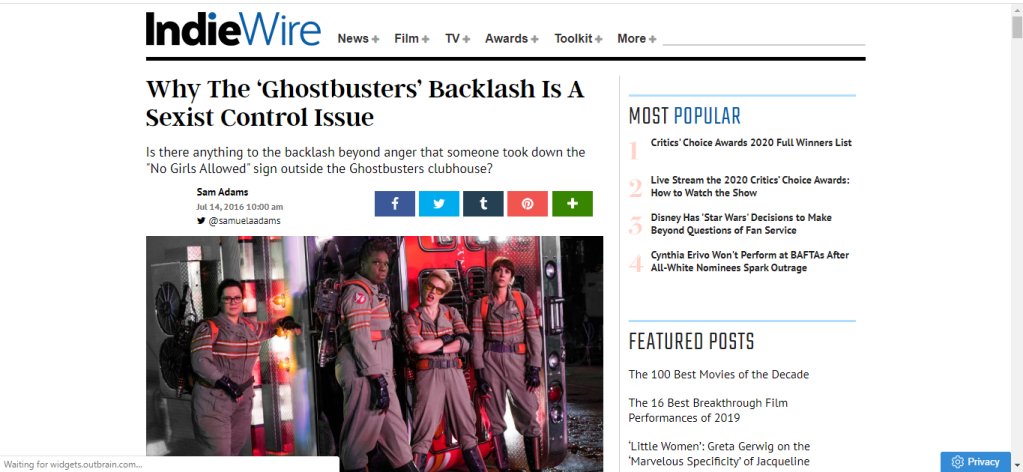
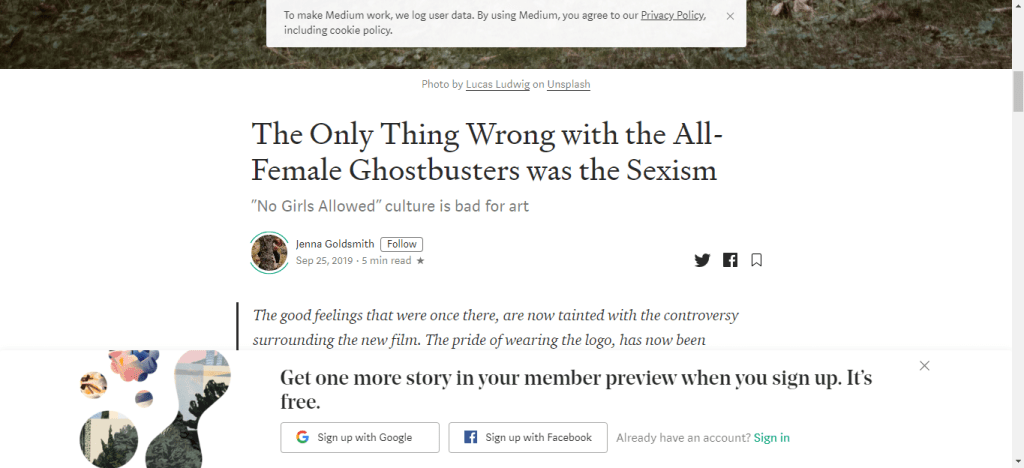
As the cast take 5 for a break, Ross Geller’s counterpart (Jerrod Carmichael) begins talking with comedian Hannibal Buress who gives his opinion on the project. “Garbage. Terrible man… Episodes of Seinfeld but with black people. Who asked for this?” Carmichael attempts to explain “When they asked me to do it I was like alright this is something subversive, something that’ll turn the culture on it’s head.” Buress rebuttals “Well you did a good job subverting good comedy. What you gonna do black Full House next? Family Ties?” This idea of plastic representation can be highlighted in numerous films. Namely the 2016 all-female Ghostbusters reboot and the 2014 Annie reboot. The hate and general disapproval these movies have received has attempted to be explained away as non-conformist straight white men being unable to adapt to unconventional societal norms being displayed on our screens; I believe it is this concept of plastic representation that is truly at the core of the backlash however. As Jay-Z and Hannibal Buress point out, the replacement of already existing characters with actors of a different sex or skin complexion just seems superficial and lazy rather than convention breaking and original. This idea of plastic representation has attempted to be labelled on new superhero movies such as 2017, Wonder Woman and 2018, Black Panther. Stating that these films and others like them reproduce the conservative politics of the superhero genre in a different guise. I would disagree with this however; as both Black Panther and Wonder Woman have already been their own unique character with their own mythology for decades at this point. In order to accuse these two films of the plastic representation that I have labelled on Ghostbusters and Annie, you would have to state that the comic book world and mythology is an enterprise dominated by white males. I believe comic books are an artform and I do not believe that a true artform can have any distinct, race, sexuality or gender.
 Jonathan Burns's Film Blog